NAD+ and the Science of Healthy Aging
Category: Healthy Aging
Most of us think about aging in terms of birthdays.
Every year, another candle gets added to the cake, and there is nothing we can do to change that number.
But researchers studying healthy aging are increasingly interested in a different topic which is how well your body is functioning as you get older.
That question has brought growing attention to three terms you may be hearing more often: NAD+, NMN and VO₂ max.
At first glance, they may seem highly scientific and unrelated.
Two are molecules involved in what happens inside our cells, while the other is a measurement of physical fitness. Yet together, they offer an interesting way to look at energy, cellular health and a person’s ability to remain active as they age.
NAD+: A Key Player in Cellular Energy
The story begins deep inside the cells.
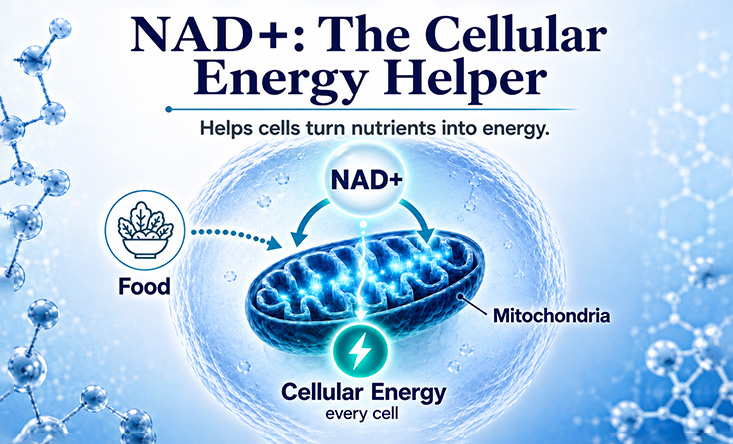
NAD+, short for nicotinamide adenine dinucleotide, is a naturally occurring molecule found throughout the body. Although it has only recently become a popular topic in longevity conversations, scientists have been studying its biology for more than a century.
One of NAD+’s most important roles involves energy production. Every cell needs energy to perform its job, whether it is in your brain, heart, muscles, or other tissues. NAD+ participates in the chemical reactions that help convert the carbohydrates, fats and proteins we eat into energy our cells can actually use.
Much of this energy production occurs in the mitochondria, but NAD+ does more than help produce energy. It is also used by enzymes involved in cellular signaling, stress responses, and processes that maintain and repair cells. This combination of roles is one reason researchers have become so interested in NAD+ and healthy aging.
As we get older, the way our bodies produce energy and respond to stress can change.
Research suggests that NAD+ metabolism can change with age as well, although the picture is more complicated than simply saying that NAD+ automatically drops in everyone. Physical activity, metabolic health, lifestyle and other factors appear to influence these pathways.
This has led scientists to investigate ways of supporting the body’s ability to maintain NAD+.
NMN: Helping the Body Make NAD+
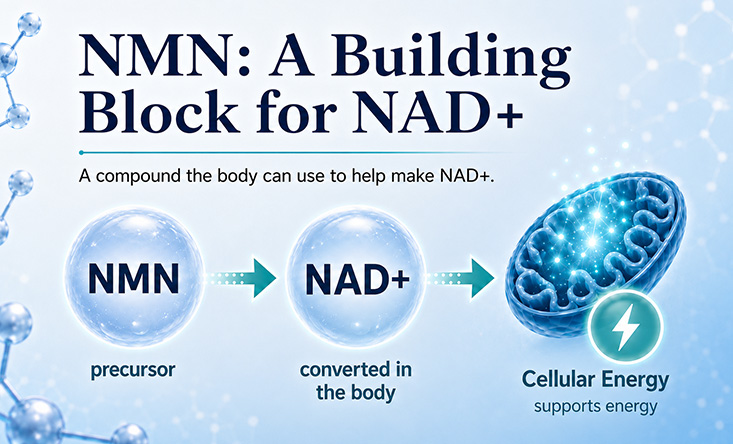
NMN stands for nicotinamide mononucleotide. It is a naturally occurring compound that the body can use as a precursor to NAD+. In much simpler terms, NMN is one of the building materials the body can use to make NAD+.
Scientists began mapping these biological pathways decades ago. During the 1950s, researchers Jack Preiss and Philip Handler helped uncover how different precursor molecules are converted into NAD+. That work provided part of the foundation for today’s research into NAD+ metabolism and healthy aging.
Modern human studies have shown that supplemental NMN can increase NAD+ levels in the blood. Researchers are now trying to understand what that increase might mean for different aspects of health.
Some studies have explored muscle function, insulin sensitivity, walking performance, sleep and exercise capacity. A few have produced encouraging findings, particularly in certain groups of older adults or people with metabolic concerns.
However, this is also an area where enthusiasm can sometimes get ahead of the science.
Increasing NAD+ levels does not automatically mean someone will suddenly have more energy, reverse aging or dramatically improve athletic performance. Human NMN research is still relatively young, and larger, longer studies are needed to understand which benefits are most meaningful and who may benefit most.
The research is promising, but NMN is best viewed as one potential part of a much bigger healthy-aging picture.
VO₂ Max: Measuring Your Body’s Physical
Capacity
That bigger picture becomes especially clear when we look at VO₂ max.
Unlike the other two, VO₂ max is a measurement of how effective your body can use oxygen during demanding physical activity.
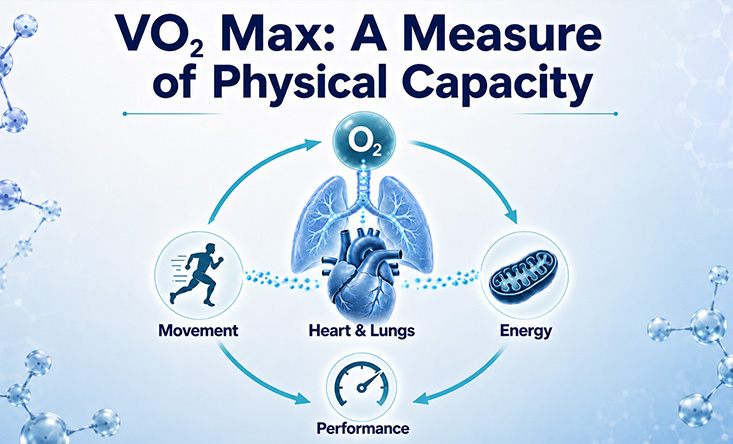
When you exercise, your lungs bring oxygen into the body. Your heart pumps oxygen-rich blood through your circulation. That oxygen eventually reaches your working muscles, where it plays an important role in producing energy.
VO₂ max measures the maximum amount of oxygen your body can take in, transport and use during intense exercise.
That makes it one of the best-known measures of cardiorespiratory fitness.
For years, VO₂ max was discussed primarily among endurance athletes, coaches and exercise physiologists. Today, it is becoming more common in conversations about longevity because cardiorespiratory fitness is closely associated with
long-term health.
And you do not have to be a marathon runner to care about it.
Why VO₂ Max Matters Beyond Exercise
Think about what physical capacity means in everyday life.
It is the ability to walk up a hill without becoming completely winded. It is carrying groceries, traveling, gardening, hiking, swimming, cycling or playing with grandchildren. It is having enough reserve capacity that ordinary activities do not feel exhausting.
VO₂ max tends to decline as we age, but that decline is not entirely predetermined. Regular physical activity—particularly aerobic exercise—can help maintain or improve cardiorespiratory fitness.
That is why VO₂ max is gaining so much attention in discussions about healthy aging. It gives us a way to think about not just how long we live, but how much physical capability we can maintain while we are living those years.
For most people, improving VO₂ max is not about becoming an elite athlete. It is about creating enough fitness and reserve capacity to stay active and independent.
From Cellular Energy to Whole-Body
Performance
This is where NAD+, NMN and VO₂ max start to tell a larger story.
NMN can provide material the body uses to produce NAD+. NAD+ is involved in cellular energy metabolism and other important cellular processes. VO₂ max tells us something about how effectively the heart, lungs, circulation and muscles work together when the body needs to produce a lot of energy.
They are connected by the broader theme of how effectively the body creates and uses energy.
But it is important not to oversimplify that connection.
Current research does not show that taking NMN will automatically increase someone’s VO₂ max. In one study of amateur runners, NMN combined with exercise training improved certain measures of aerobic exercise capacity, but it did not significantly increase VO₂ max itself.
That distinction is important because healthy aging is rarely the result of one nutrient, one supplement or one measurement.
Instead, these discoveries are helping researchers understand more about the systems that support energy production and physical performance from the cellular level all the way to the whole body.
Supporting the Systems That Help Us
Age Well
The science around NAD+, NMN and VO₂ max also reinforces something we already know: the fundamentals still matter.
Regular movement challenges the cardiovascular system and helps maintain physical capacity.
Aerobic activities such as brisk walking, swimming, cycling or interval training can support cardiorespiratory fitness.
Strength training helps maintain muscle mass and physical function.
A nutrient-dense diet provides the raw materials the body needs to operate. Eating enough protein can help support muscle, while fruits, vegetables and other plant foods provide a variety of nutrients and protective compounds.
Sleep and recovery are equally important because the body performs many of its restorative processes while we rest.
As researchers learn more about NAD+ metabolism, there is also growing interest in nutritional strategies that may help support NAD+ production and cellular defense alongside these foundational habits.
The goal is not to replace healthy behaviors. It is to understand more about the biology behind them and explore additional ways to support the body as it ages.
Healthy Aging Is About Staying Capable
Perhaps the most useful way to think about this emerging science is about staying capable for longer.
We cannot change the number of years we have been alive, but we can pay attention to many of the systems that influence how we feel and function during those years.
Can we maintain our strength? Can we continue moving comfortably? Can we support the cellular processes involved in producing energy? Can we preserve enough physical capacity to continue doing the things that make life enjoyable?
Those are much more meaningful questions than simply asking how to “fight aging.” NMN, NAD+ and VO₂ max give us three different windows into that conversation—from the molecules working inside our cells to the oxygen our bodies use when we move.
The science is still evolving, but the message is already valuable: healthy aging is not simply about living longer. It is about supporting the body so that we can continue to live well, stay active and make the most of the years ahead.
Stay Healthy!
Jerry Baker / Wellness Coach / Jerry@Fit4LifeLLC.com / (703) 626-0774