What Your Plate Has To Do With Blood Sugar
Category: Healthy Eating
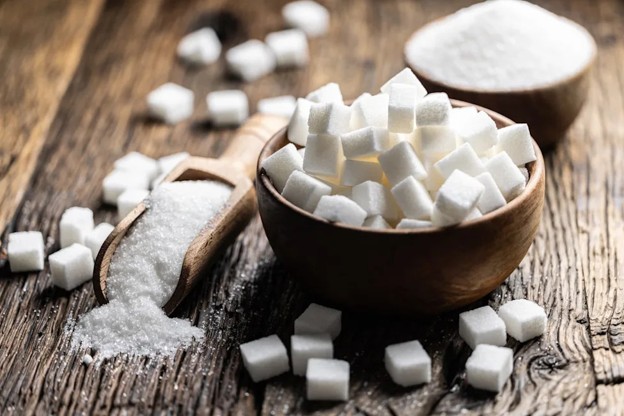
October quietly kicked off what I like to call  sugar season.
As we move into the holiday season, sweets, desserts, seasonal drinks and extra treats tend to become a much bigger part of everyday life.

And usually, this is where the conversation turns into:
“Eat less sugar.”
“Skip dessert.”
“Try to be good.”
But I think there’s a much more useful conversation we can have.
Instead of only focusing on what to avoid, it helps to understand what your body is actually doing with the food you eat and what can help support a more balanced blood sugar response.
What Happens to Blood Sugar
After You Eat
When you eat carbohydrates, your body breaks many of them down into glucose. That glucose enters your bloodstream and becomes an important source of energy.
Blood sugar naturally changes after eating, but the goal is to support a healthy, balanced response and help your body use that glucose efficiently.
And interestingly, it isn’t always just about the amount of sugar you eat.
What You Eat With It Matters
Protein, fiber and healthy fats can help create a more balanced meal and can slow how quickly carbohydrates are digested and absorbed.
There’s a difference between eating something sweet by itself and having it as part of a meal that also contains protein, vegetables, fiber and healthy fats.
What Can a Balanced Plate Look Like?
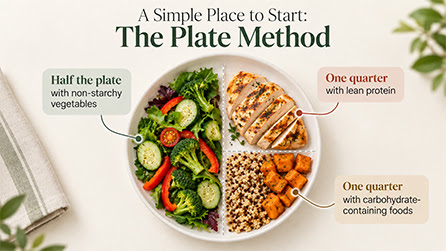
A simple place to start is the plate method:
Half the plate with non-starchy vegetables
One quarter with lean protein
One quarter with carbohydrate-containing foods
Here are a few examples of foods that can fit into that kind of meal:
 Healthy fats
Olive oil, avocado, nuts, seeds, nut butters and fatty fish such as salmon.
 Non-starchy vegetables
Broccoli, spinach, leafy greens, peppers, zucchini, cauliflower, green beans, mushrooms, asparagus, tomatoes and cabbage.
 Fruit
Berries, apples, oranges, peaches, pears, melon and other whole fruits.
Whole fruit can often be a more filling choice than juice because it retains its fiber.
Fruit still contains carbohydrates, though, so portion size and a person’s individual blood sugar response matter.
Don’t Forget What Happens
After the Meal
Your muscles use glucose for energy, which is one reason movement after eating can be helpful.
Even a short walk after a meal can support the way your body handles glucose.
It doesn’t need to be a workout.
Walking the dog, taking a few laps around the neighborhood, cleaning up the kitchen or simply moving around the house all count.
Want to Learn a Little More?
I have an article in my Wellness Center called The Blood Sugar Stability Stack that takes this conversation a step further.
It looks at how a layered approach to nutrition can support steadier energy throughout the day and why blood sugar is about much more than simply avoiding sweets.

The Blood Sugar Stability Stack
If afternoon energy crashes, cravings, or that foggy feeling after eating sound familiar, this is a good one to read.
Take care and stay resilient!
Jerry
Your Wellness Guide
+1 703-626-0774 / Jerry@Fit4LifeLLC.com
https://www.fit4lifellc.com