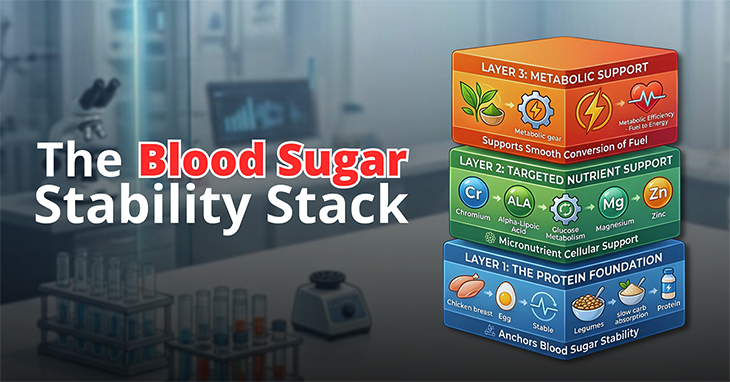
The Blood Sugar Stability Stack
Category: Healthy Eating
When most people think about blood sugar, they think about sweets. But blood sugar stability influences far more than dessert. It affects energy, focus, cravings, mood, and even how resilient you feel under stress.
If you’ve experienced:
- Brain fog after a carb-heavy meal
- The 3PM crash
- Irritability when meals are delayed
- Strong cravings for sugar or caffeine
You’ve likely felt the effects of glucose fluctuations.
The goal isn’t restriction.
The goal is stability.
That’s where the Blood Sugar Stability Stack comes in.
What Is the Blood Sugar Stability Stack?
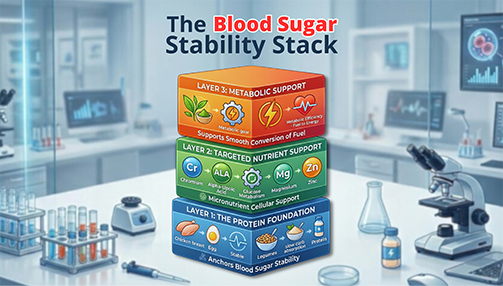
The Blood Sugar Stability Stack is a layered approach to supporting:
- Healthy glucose regulation
- Cellular energy production
- Metabolic efficiency
- More consistent daily performance
Instead of quick fixes, this approach builds support in layers, starting with nutrition, then supporting the body’s internal metabolic pathways.
Layer 1: The Protein Foundation
Protein is the anchor of blood sugar stability. It helps slow the absorption of carbohydrates, which may reduce rapid glucose spikes and promote steadier energy after meals. Common protein sources include:
- Eggs
- Greek yogurt
- Cottage cheese
- Chicken or turkey
- Fish
- Lean beef
- Tofu or tempeh
- Beans and lentils
- Protein shakes
Pairing carbohydrates with protein can help moderate how quickly glucose enters the bloodstream. Many people notice:
- Fewer sharp crashes
- More stable focus
- Reduced cravings
- Longer satiety between meals
If there is one foundational habit, it’s this one.
Layer 2: Targeted Nutrient Support
Beyond macronutrients, certain micronutrients play important roles in glucose metabolism. These nutrients support how the body processes and utilizes glucose at a cellular level.
Chromium
Chromium supports insulin function and healthy glucose utilization. It helps your body move glucose from the bloodstream into cells, where it can be used for energy. Food sources include:
- Broccoli
- Whole grains
- Green beans
- Nuts
Alpha-Lipoic Acid (ALA)
ALA supports cellular energy metabolism and functions as an antioxidant within energy-producing pathways. It plays a role in how your cells convert nutrients into usable energy.
Small amounts are found in:
- Spinach
- Broccoli
- Brussels sprouts
- Organ meats
Magnesium
Magnesium is involved in hundreds of enzymatic reactions, including carbohydrate metabolism. It supports normal metabolic function and overall cellular health.
Food sources include:
- Pumpkin seeds
- Almonds
- Cashews
- Black beans
- Spinach
Zinc
Zinc plays a role in insulin activity and supports overall metabolic processes related to glucose handling. These nutrients don’t override lifestyle habits. Instead, they support the pathways already built into your body, helping them function efficiently as part of a healthy routine.
Food sources include:
- Oysters
- Beef
- Chickpeas
- Seeds
- Dairy products
These nutrients don’t replace blood glucose and energy levels. They support the internal systems that regulate glucose and energy.
Layer 3: Metabolic Support
The third layer focuses on metabolic efficiency — how effectively the body converts fuel into usable energy. Ingredients like green tea extract support natural metabolic activity. Additional nutrients may help maintain blood sugar levels already within the normal range as part of a healthy lifestyle.
This layer is about smooth conversion of fuel, not stimulation. When metabolism functions efficiently, energy tends to feel more even and sustainable.
The Often-Missed Issue: Stress and Sleep
Stress and sleep are often overlooked, yet they play a significant role in blood sugar stability.
Stress hormones directly influence glucose levels, and poor sleep, chronic stress, or irregular eating patterns can contribute to energy volatility even when nutrition is otherwise well balanced.
Supporting stability therefore includes maintaining consistent sleep timing, eating at regular intervals, incorporating daily movement, and practicing stress management strategies such as breathing exercises, short walks, or intentional breaks throughout the day.
No blood sugar stability approach is complete without addressing these foundational lifestyle factors.
What About Low Blood Sugar Dips?
Occasional dips can happen, especially after long gaps between meals or high-sugar foods eaten alone. Signs may include:
- Shakines
- Sudden fatigue
- Difficulty concentrating
- Strong cravings
A supportive response often includes:
- Combining protein + fiber (for example nuts with fruit)
- Adding protein to the next meal
- Avoiding large amounts of simple sugar alone
- Eating at more regular intervals
Rather than chasing a spike with more sugar, stabilizing with protein and balanced nutrients may support a smoother recovery.
How the Stack Works Together
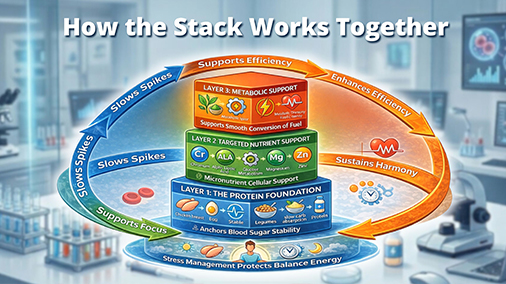
Each layer supports the next:
- Protein slows absorption.
- Micronutrients support glucose utilization.
- Metabolic ingredients support efficient energy production.
- Stress management protects balance.
Together, this layered approach promotes:
- More consistent energy
- Clearer thinking
- Fewer dramatic crashes
- Better daily performance
The Blood Sugar Stability Stack is about supporting your body’s natural regulatory systems in layers.
When energy is steady:
- Focus improves
- Cravings feel more manageable
- Performance feels smoother
- Your day feels more predictable
Stability isn’t extreme. It’s sustainable.
Watch The Blood Sugar Rollercoaster
If you’d like a deeper breakdown of how blood sugar fluctuations happen and how to smooth them out, watch the Blood Sugar Rollercoaster with Dr. Richard Brouse

In this session, our experts explore:
- How to smooth energy spikes and support steadier performance throughout the day
- The science behind blood sugar imbalances
- Why protein plays a powerful role in stabilizing glucose
- Practical tips for meal planning and balanced snack ideas
This replay expands on the layered approach outlined above and walks through real-world applications you can begin implementing immediately. (If you have concerns about blood sugar or a diagnosed condition, consult your healthcare provider for personalized guidance).
Here’s to having a steady energy all throughout the day!
Jerry
(703) 626-0774 / Jerry@Fit4LifeLLC.com


Facebook Comments