The Building Blocks of Longevity
Category: Healthy Aging
Have you ever noticed how two people of the same age can experience aging so differently?
One person in their 70s might still enjoy hiking, traveling, or keeping up with their grandchildren, while someone younger may already notice changes in strength, energy, or mobility.
We often think of aging as simply the passage of time, but scientists are discovering that the number of years we’ve lived doesn’t necessarily tell the whole story of how our bodies are aging.
Understanding what’s happening beneath the surface may offer a different perspective on growing older.

Your Birthday Doesn’t Tell the Whole Story
Chronological age is the number of years you’ve been alive.
Biological age, on the other hand, attempts to estimate how your body is aging based on changes in cells, tissues, and organ systems.
Two people who are both 70 may have very different levels of cardiovascular fitness, muscle strength, or mobility.
Researchers study these differences using molecular markers, metabolic measurements, and indicators of physical function. However, no single universally accepted test can determine someone’s exact biological age.
This brings us to another important distinction: lifespan vs. healthspan.
Lifespan refers to how long we live. Healthspan describes the years we spend in good health.
Living longer is appealing, but maintaining the strength, mobility, and independence to enjoy those years may be even more meaningful.
What’s Happening Inside Your Cells
as You Age?
While we often notice aging through visible changes, much of the process happens inside our cells.
Our bodies contain trillions of cells working continuously to produce energy, maintain tissues, and carry out essential functions.
Inside many of these cells are mitochondria, specialized structures that help convert nutrients into usable energy.
This process depends on many molecules working together, including one attracting particular attention in longevity research: NAD+ (nicotinamide adenine dinucleotide).
NAD+ plays an essential role in cellular energy metabolism. It also participates in cellular signaling and processes involved in DNA maintenance and repair.
Researchers are investigating how NAD+ metabolism changes with age and how those changes may influence long-term health.
Although this research is developing, NAD+’s established role in normal cellular function highlights an important point: healthy aging involves much more than energy production alone.
Your Cells Have Natural Defense Systems
As cells carry out normal metabolism, they produce reactive molecules, including free radicals.
Surprisingly, not all free radicals are harmful. Some play useful roles in cellular communication.
Problems can occur when these molecules overwhelm the body’s protective systems, creating an imbalance known as oxidative stress.
Excessive oxidative stress can contribute to damage involving proteins, fats, and DNA.
Fortunately, our bodies have natural antioxidant defenses.
Researchers also study how nutrients and plant compounds, including polyphenols found in fruits and vegetables, interact with cellular protection and signaling pathways.
Together, cellular energy and protection are important parts of understanding the biological processes associated with aging.
Collagen: More Than Skin Deep
When you hear collagen, you might think of wrinkles or skin care. But collagen has a much bigger job.
Collagen is the body’s most abundant protein, providing structural support to skin, tendons, ligaments, cartilage, and bones.
Different types of collagen serve different purposes:
- Type I: Found abundantly in skin, tendons, and bones.
- Type II: A major component of joint cartilage.
- Type III: Helps support skin, blood vessels, and other tissues.
Think about walking upstairs or getting out of a chair. Your muscles create movement, tendons transfer force, ligaments stabilize joints, and cartilage helps cushion the areas where bones meet.
Collagen is an important structural component in many of these tissues.
How Collagen Changes With Age
Our bodies naturally produce collagen, but its production and maintenance change over time.
Collagen fibers may become more rigid, while changes in skin collagen can influence firmness and elasticity. Sun exposure, smoking, and nutrition can also affect connective tissue health.
Researchers have explored compounds such as collagen peptides, hyaluronic acid, and chondroitin sulfate for their potential roles in skin and joint health.
Some studies report benefits for certain skin and joint outcomes, although findings vary and further research is needed.
But here’s an interesting question: Do we actually need to consume collagen to help our bodies produce it?
You Don’t Have to Eat Collagen
to Make Collagen
Your body naturally manufactures collagen using amino acids, the building blocks of protein.
Three particularly important amino acids are glycine, proline, and lysine.
But amino acids aren’t the only nutrients involved.
Vitamin C is essential for normal collagen formation. It helps enzymes modify and stabilize collagen proteins, allowing the body to build strong collagen fibers.
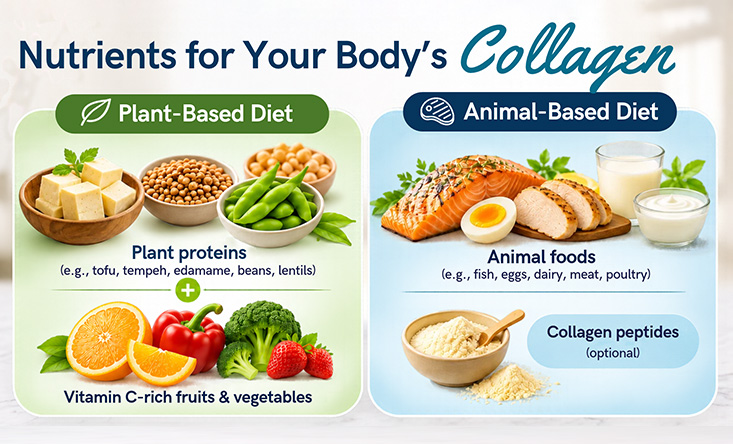
Foods such as citrus fruits, strawberries, kiwi, bell peppers, and broccoli provide vitamin C. The encouraging part is that these building blocks are available through both plant-based and animal-inclusive diets.
For People Following a Plant-Based Diet
Traditional collagen supplements come from animal sources, but consuming animal-derived collagen isn’t necessary for the body to make its own.
Plant proteins such as tofu, tempeh, edamame, beans, and lentils provide amino acids needed for normal protein synthesis.
Combined with vitamin C-rich fruits and vegetables, a varied, nutritionally adequate plant-based diet can provide the nutrients required for collagen formation.
For People Who Eat Animal-Based Foods
People who include animal products can obtain amino acids from eggs, fish, poultry, meat, and dairy.
Some also choose collagen peptides, typically derived from animal connective tissues.
During digestion, collagen proteins are broken down into smaller peptides and amino acids.
Researchers continue investigating whether particular collagen peptides provide additional benefits for skin and joint health.
However, consuming collagen doesn’t mean it travels directly to your skin or joints.
Whether your diet is vegan or non-vegan, your body relies on the same fundamental nutrients to build and maintain collagen.
The Everyday Longevity Connection
Understanding biological age, cellular function, and collagen helps us appreciate what’s happening inside our bodies.
But how can we apply that knowledge?
Many foundations of healthy aging are surprisingly familiar.
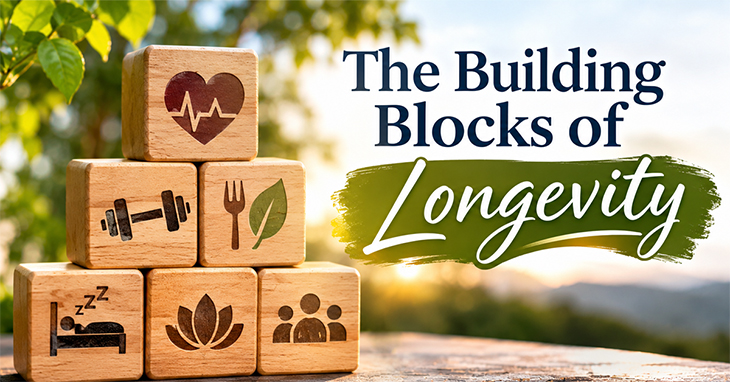
Nourish: A varied diet provides amino acids, vitamins, minerals, and other nutrients involved in normal tissue maintenance and cellular function.
Move: Strength, cardiovascular fitness, balance, and flexibility help maintain physical function. Walking, gardening, dancing, and other enjoyable activities all contribute to staying active.
Rest: Adequate sleep supports physical recovery, concentration, and overall well-being.
Restore: Making time to manage stress, connect with others, and enjoy relaxing activities supports a balanced lifestyle.
These habits work together. Good nutrition supports normal body processes, movement contributes to physical fitness, and adequate rest helps us recover.
Healthy aging isn’t about finding one perfect supplement, food, or routine. It’s about supporting the body’s interconnected systems over time.
We can’t change the year we were born or control every factor influencing how our bodies age.
But understanding biological aging reminds us that getting older involves much more than watching the years pass.
From cellular energy to the connective tissues supporting our movement, many processes work together to help us function throughout life.
So here’s a question worth considering:
When you imagine yourself 10 or 20 years from now, what do you hope you’ll still be able to do?
Maybe it’s traveling, spending time with grandchildren, enjoying your favorite hobbies, or simply moving comfortably through your day.
Whatever that picture looks like, caring for your health today can help support the life you want to keep living.
Because longevity is about supporting your ability to enjoy the life in those years.
Jerry
Your Wellness Guide
+1 703-626-0774 / Jerry@Fit4LifeLLC.com
https://www.fit4lifellc.com