The Whole-Body Role of Collagen (and why it matters for your skin, hair, joints, movement, and resilience)
Category: Healthy Aging
Many people do not think much about collagen until they start noticing changes they can see or feel.
Skin may look drier. Hair may feel less full or vibrant. Nails may feel weaker. Fine lines may become more noticeable. Movement may feel a little less fluid, or recovery may take longer than it used to.
These changes can feel frustrating, but they can also be helpful signals.
Collagen is not just a beauty topic. It is one of the body’s most important structural proteins, helping support the framework of your skin, joints, bones, cartilage, tendons, ligaments, and connective tissue.
That means collagen plays a role in more than how you look. It helps support how your body moves, feels, recovers, and maintains strength over time.
Collagen Is the Body’s Structural Support System
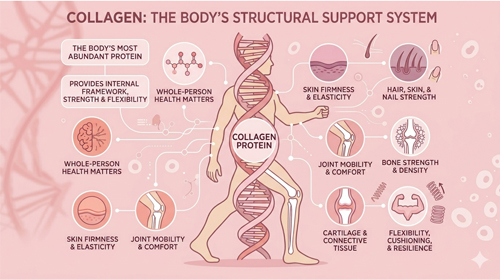
Collagen is the most abundant protein in the human body
It helps provide structure, strength, flexibility, and resilience throughout the body. Think of it as part of the internal framework that helps hold everything together.
Collagen helps support:
- Skin firmness and elasticity
- Hair, skin, and nail strength
- Joint mobility and comfort
- Bone strength and density
- Cartilage and connective tissue integrity
- Flexibility, cushioning, and structural resilience
This is why healthy collagen matters for the whole person, not just for appearance.
Why Collagen Changes Over Time
The body naturally produces collagen throughout life, but that process changes with age.
Collagen production can begin to slow as early as the mid-20s. Over time, especially through the 40s and beyond, the balance between collagen breakdown and collagen renewal may continue to shift.
This can affect both the amount and quality of collagen in the body.
Several factors can influence collagen breakdown, including:
- Aging
- Oxidative stress
- Inflammation from everyday activity
- Stress
- Hormonal changes
- Environmental exposure
- Nutrition and lifestyle habits
For women, hormonal shifts can also play an important role. Changes during different life stages, including perimenopause and menopause, may influence skin elasticity, connective tissue health, recovery, and how supported the body feels overall.
This matters because collagen is connected to the way your body maintains firmness, flexibility, cushioning, mobility, and structural resilience.
Why Skin, Hair, and Nails Are Often the First Signs
Many collagen-related changes become noticeable on the outside first. Your skin depends on collagen for firmness, elasticity, hydration, and resilience. Your hair and nails also reflect your body’s internal nutrition, protein intake, stress load, and overall wellness environment.
When collagen support changes, the outside of the body can begin to show signs such as:
- Drier-looking skin
- Less firmness or elasticity
- Fine lines becoming more visible
- Hair feeling weaker or less vibrant
- Nails becoming more brittle
- Slower recovery from everyday stress
These outer signs are not just cosmetic.
They can reflect a deeper need for more structural, nutritional, and whole-body support.
Collagen and the Whole Body
Collagen is found throughout the body’s most important structural systems.
It helps support the tissues that allow you to move, bend, stretch, lift, walk, recover, and stay active.
Joints
Collagen helps support joint structure, comfort, and mobility. When connective tissue and cartilage are well supported, movement may feel more fluid and stable.
Bones
Collagen is part of the structure that helps give bones strength and resilience. Bone health is not only about minerals. The structural framework also matters.
Cartilage
Cartilage helps cushion and support joints. Collagen contributes to cartilage integrity and the body’s ability to absorb everyday impact.
Connective Tissue
Tendons, ligaments, and connective tissues rely on collagen for strength, flexibility, and stability.
This is why collagen can influence how supported your body feels during daily movement.
The Problem with Only “Adding More Collagen”
Many traditional collagen conversations focus on one idea:
Add more collagen.
That can be helpful, but it is incomplete.
Your body’s collagen is not a fixed resource. It is constantly being broken down, rebuilt, and reorganized every day.
As the body ages, collagen breakdown can increase while natural renewal becomes less efficient. The environment around collagen can also become less hydrated and less stable.
So a more complete approach asks a better question:
How do we support the full collagen lifecycle?
A Better Way to Think About Collagen
Modern collagen support is shifting from a simple replenishment mindset to a lifecycle approach.
Instead of only focusing on adding more collagen, a more complete approach supports collagen in three key ways:
1. Protect What You Already Have
Everyday oxidative stress and inflammation can contribute to collagen breakdown.
This is why antioxidant support, healthy lifestyle habits, quality sleep, hydration, and stress recovery all matter. They help create a better internal environment for protecting the collagen your body already has.
The goal is to help defend and maintain the collagen structures already working inside your body.
2. Support Natural Renewal
Your body naturally produces collagen, but this process can slow over time.
Bioactive collagen peptides are often discussed in collagen science because they may help support the body’s natural signaling process for collagen renewal.
Nutrients such as vitamin C, zinc, biotin, and amino acids also play important roles in the body’s ability to build and maintain healthy tissue.
The goal is to support the body’s natural renewal process with the tools it needs to keep rebuilding well.
3. Build the Right Environment
Collagen needs the right internal environment to stay strong, flexible, hydrated, and resilient.
That means supporting the body in a few key ways:
- Hydration and cushioning support to help maintain moisture in the skin and the fluid environment around joints
- Structural support from minerals and nutrients that help maintain tissue strength and normal repair processes
- Antioxidant support to help defend against oxidative stress, one of the factors that can contribute to collagen breakdown
- Healthy inflammation support to help maintain a balanced internal environment for connective tissue
- Protein and amino acid support to provide the building blocks the body uses for renewal
Certain nutrients and compounds, such as hyaluronic acid, chondroitin sulfate, zinc, boron, antioxidant-rich plant extracts, marine plant compounds, and amino acids, can all play a role in supporting this internal environment.
This is why collagen support is not only about collagen itself.
It is also about caring for the environment collagen depends on, including hydration, nutrients, antioxidants, and connective tissue support.
When that environment is well supported, the body is better equipped to maintain collagen strength, flexibility, and resilience over time.
Why Everything Feels Connected
Collagen is connected to multiple systems in the body.
You may notice changes in your skin, hair, nails, joints, recovery, and movement as your body’s collagen support and overall resilience shift over time.
These changes are connected because the body is connected.
Stress, hormones, inflammation, nutrition, sleep, hydration, and collagen biology all influence one another.
Instead of chasing one concern at a time, it is often more helpful to support the body as a whole.
Simple Ways to Support Collagen and Overall Wellness
Start with the foundations:
- Protein gives your body the building blocks it needs for tissue renewal.
- Hydration supports skin moisture and connective tissue resilience.
- Antioxidant-rich foods help protect against oxidative stress.
- Quality sleep supports the body’s natural repair processes.
- Stress recovery helps create a healthier internal environment.
- Regular movement helps maintain strength, mobility, and healthy circulation.
- Key nutrients such as vitamin C, zinc, biotin, and minerals help support normal tissue health.
Small habits repeated over time can help create the internal environment your body needs for repair, renewal, and structural support.
The Bigger Picture
Collagen is part of the body’s framework.
It helps support the skin you see, the joints you move with, the bones that give you strength, and the connective tissues that help keep your body stable and resilient.
So when you think about collagen, think beyond fine lines, hair, or nails.
Think about structure.
Think about movement.
Think about resilience.
Think about long-term vitality.
Your body is always rebuilding.
The question is whether you are giving it the support it needs to rebuild well.
If you have concerns about changes in your skin, hair, nails, joints, mobility, or overall health, consult your healthcare provider for personalized guidance.
Here’s to giving your body the support it needs to feel strong, resilient, and cared for every day.
Jerry / jerry@Fit4LifeLLC.com